
If you’re planning a piano removal in Stockport, preparation is everything. Pianos are among the most complex items to move; they’re heavy, structurally sensitive, and emotionally irreplaceable. Whether you own an upright, a baby grand, or a full concert grand, cutting corners in the run-up to moving day can lead to costly damage or injury.
At Merit Removals, we’ve helped countless Stockport homeowners and musicians move their pianos safely across Greater Manchester and beyond. In this guide, we share 10 essential things to do before your piano removal day so everything goes smoothly from start to finish.
1. Book a Specialist Piano Removal Company Early
The first and most important step is to secure your booking well in advance. Piano removals require specialist equipment, trained personnel, and careful logistical planning; this isn’t a job for a standard van and a couple of friends.
Look for a removal company that explicitly offers piano removal as a dedicated service. Ask about their experience, equipment, and insurance before confirming. In Stockport, demand for specialist removals can be high, particularly during spring and summer, so booking early gives you the best choice of available dates.
2. Measure Every Doorway, Hallway, and Staircase on the Route
One of the most common causes of piano removal problems is inadequate space planning. Even a compact upright piano can be wider than a standard interior doorway.
What to Measure
Before moving day, take accurate measurements of:
- All doorways (width and height) along the exit route
- Hallways and any tight corners or alcoves
- Staircases, including any landings or low ceilings
- The destination property’s access points
Why This Matters
Sharing these measurements with your removals team in advance allows them to plan the correct approach whether that means removing a door, using a staircase dolly, or arranging specialist lifting equipment. It avoids costly delays or last-minute surprises on the day.
3. Get Your Piano Professionally Tuned After the Move Not Before
Many piano owners make the mistake of having their instrument tuned immediately before a removal. In reality, the vibration, temperature changes, and atmospheric shifts during transit will almost certainly knock it out of tune again.
Save your money and schedule your piano tuner for a few weeks after the move, once the piano has had time to acclimatise to its new environment. Most piano technicians recommend waiting at least two to four weeks before tuning after any removal.
4. Photograph the Piano’s Condition Before It Leaves
Documentation is one of the most overlooked steps in any specialist removal. Before the piano is moved a single inch, take clear photographs of:
- All four sides of the instrument
- The keyboard lid and any existing scratches or marks
- The pedals and castor wheels
- Any existing damage to the finish or frame
This protects both you and your removal company. Should any dispute arise, you’ll have timestamped evidence of the piano’s pre-move condition. A reputable company like Merit Removals will already carry full goods-in-transit insurance, but documentation adds an extra layer of security.
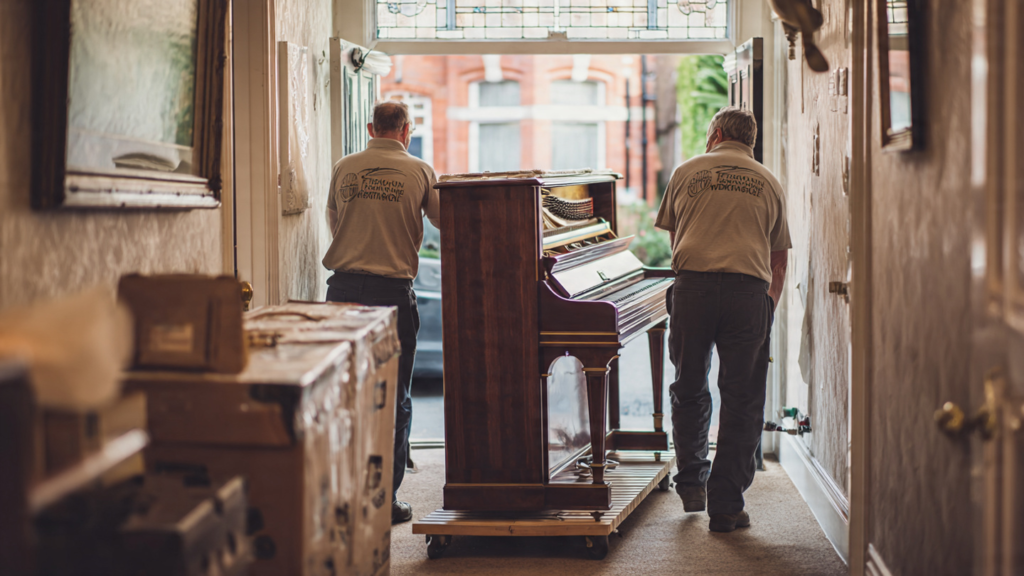
5. Clear the Route Inside Both Properties
Piano removal teams work most efficiently and most safely when they have a clear, unobstructed path to work with. In the days leading up to your move:
- Remove rugs, doormats, and any loose floor coverings along the route
- Temporarily relocate furniture that narrows hallways or landings
- Ensure children and pets are in a separate room or cared for elsewhere on moving day
- Check the front path and garden gate access at both properties
If you’re moving out of a terraced property in Stockport or a flat with communal areas, it may also be worth notifying neighbours in advance, particularly if the removal team needs temporary access to shared spaces.
6. Check the Piano’s Locking Mechanism and Secure Moving Parts
Most upright pianos have a keyboard lid that can be locked shut. Before removal day, ensure this is locked or firmly secured. For grand pianos, the lid prop and music desk should be removed and wrapped separately.
Preparing the Piano Itself
- Lock the keyboard lid if a key is available
- Remove the music stand or desk and wrap it in protective padding
- Check that the pedal lyre (on grands) is secure or removed
- Note any loose veneers, decorative panels, or damaged hinges that the team should be aware of
Informing your removal team of any pre-existing fragilities helps them wrap and handle the instrument with appropriate care.
7. Consider Access at the Destination Property
It’s easy to focus on getting the piano out of your current home and overlook the complexity of getting it into the new one. Think carefully about access at the destination, particularly if you’re moving to:
- A property with steps or a steep front path
- A first-floor flat without a lift
- A room that requires navigating a narrow staircase
- A property with a smaller footprint than your current home
If you’re relocating within Greater Manchester or across Stockport, speak with your removal team about a pre-move site visit. This is a straightforward process that can prevent significant problems on moving day.
8. Notify Your Home Insurer
Moving a high-value item like a piano carries inherent risk. Before your removal day, contact your home insurer to check whether your piano is covered during transit and while it’s temporarily between properties.
Some standard home insurance policies exclude items during removal. You may need to arrange additional coverage or confirm that your removal company’s goods-in-transit insurance is sufficient for the piano’s declared value.
This is particularly important for antique, heirloom, or high-specification instruments where replacement value may be significantly higher than market value.
9. Plan Where the Piano Will Live in Your New Home
This may sound straightforward, but piano placement requires more thought than most furniture. Pianos should be kept away from:
- External walls (which can be damp or cold)
- Radiators and direct heat sources
- Windows with direct sunlight
- Air conditioning units or draughty doorways
Temperature and humidity fluctuations are among the leading causes of piano deterioration. Decide on the final position before moving day, so the removal team can place the piano directly without it needing to be shifted again later.
If you’re unsure, speak to a piano technician or ask Merit Removals for advice based on the layout of your new property.
10. Confirm All Details With Your Removal Company the Day Before
The day before your piano removal in Stockport, take ten minutes to confirm everything with your removal team. A quick call or email to verify the following can prevent unnecessary stress:
- Confirmed arrival time and estimated duration
- The full address for both collection and delivery
- Any access or parking considerations at either property
- Contact numbers for both the driver and your point of contact
- Whether any specialist equipment (piano skid board, stair climber, etc.) has been confirmed for your job
Merit Removals’ team will always confirm your booking in advance, but it’s good practice to have everything in writing and to ask any final questions before the day begins.
Ready to Book Your Piano Removal in Stockport?
Whether you’re moving locally within Stockport or relocating further afield, our moving services cover everything from single-item specialist removals to full household moves. As a trusted name in Stockport removals, we’re proud to offer a service that’s built on reliability, transparency, and genuine expertise.
Get in touch today for a free quote. Visit our Contact Us page or call us directly. We’d love to help you plan your move.
Frequently Asked Questions
How much does piano removal in Stockport typically cost?
The cost of piano removal in Stockport depends on the size and type of piano, the access at both properties, and the distance of the move. Upright piano removals tend to be more straightforward than grand piano moves. Contact Merit Removals for a tailored quote based on your specific requirements.
Do I need specialist removers for a piano, or can a standard removal company do it? Pianos require specialist handling due to their weight, balance, and sensitivity to movement. A standard removal team without piano experience or appropriate equipment risks damaging the instrument or injuring themselves. Always use a company that offers dedicated piano removal as a named service.
Will my piano need returning after it’s moved?
Yes, almost certainly. Even a carefully managed removal will expose the piano to vibration and environmental changes that affect its tuning. Wait two to four weeks after the move for the piano to settle into its new environment before arranging a tuning appointment.
Can pianos be moved up or down stairs?
Yes, but it requires specialist equipment such as a stair-climbing dolly or piano skid board, as well as an experienced team. This is one of the most important things to discuss with your removal company in advance, so they can bring the correct equipment and assess the staircase beforehand.
How far in advance should I book a piano removal in Stockport?
We recommend booking at least two to four weeks in advance, particularly if you’re moving during the busy spring and summer period. Early booking ensures availability and gives the removal team sufficient time to plan the logistics of your specific move.