
Decluttering before a house move is the cheapest way to make moving day smaller, calmer and quicker. Every single item you keep has to be sorted, wrapped, boxed, carried, loaded, unloaded and unpacked. That is a lot of effort for a chipped mug or a sofa that was never going to fit the new lounge.
This guide shows you when to start, what to keep and where everything else can go. You will find a simple timeline, a room by room plan, clear answers on unwanted furniture and donations, and the legal check on rubbish removal that most people in the UK never hear about.
Already short on time? Jump straight to the section on clearing what is left.
Table of Contents
- Why Decluttering Before a House Move Matters
- When to Start Decluttering Before a House Move
- The Four Pile Method: Keep, Sell, Donate, Dispose
- How to Declutter Room by Room
- What to Do With Unwanted Furniture Before Moving
- Donate Before Moving House: Where Your Items Can Go
- Moving House Clear Out: Rubbish, Recycling and the Law
- Common Decluttering Mistakes
- Decluttering Checklist
- How Merit Removals Can Help
- FAQs
Why Decluttering Before a House Move Matters
Most people think of decluttering as tidying. In reality it is a planning job. The less you own on moving day, the less there is to pack, move and find a home for.
Here is what a lighter move gives you:
- Lower costs. Removal quotes usually reflect how much there is to move and how long the job takes. A smaller load can mean a smaller van, fewer hours or both. Our removal company cost guide explains what drives the price.
- Less packing. Fewer boxes means less tape, less paper and fewer late nights.
- A faster unpack. You only unpack things you actually want, so the new home feels like home sooner.
- A fresh start. You arrive with a house full of things you use and like, not a loft full of guilt.
There is a simple way to think about it. Anything you move, you carry twice. Once out of the old place and once into a cupboard in the new one. Ask yourself whether it deserves that journey.
When to Start Decluttering Before a House Move
Start earlier than feels necessary. Selling and donating take time, and rushed decisions usually end in a skip or a very full van. Use this timeline alongside our ultimate moving house checklist.
| When | What to do |
|---|---|
| 8 to 6 weeks before | Clear the loft, garage, shed and spare room. List valuable items for sale. |
| 6 to 4 weeks before | Sort wardrobes, books and kitchen cupboards. Book charity collections. |
| 4 to 2 weeks before | Take donations to shops and recycling points. Arrange rubbish removal for anything left. |
| Final fortnight | Do a second, tougher sort of anything you still doubt. Start packing what you are keeping. |
| Moving week | Finish the last tip run, clear fridges and freezers, and check every cupboard. |
If you only have a few weeks, do the biggest items first. One unwanted wardrobe is worth more than ten boxes of odds and ends.
The Four Pile Method: Keep, Sell, Donate, Dispose
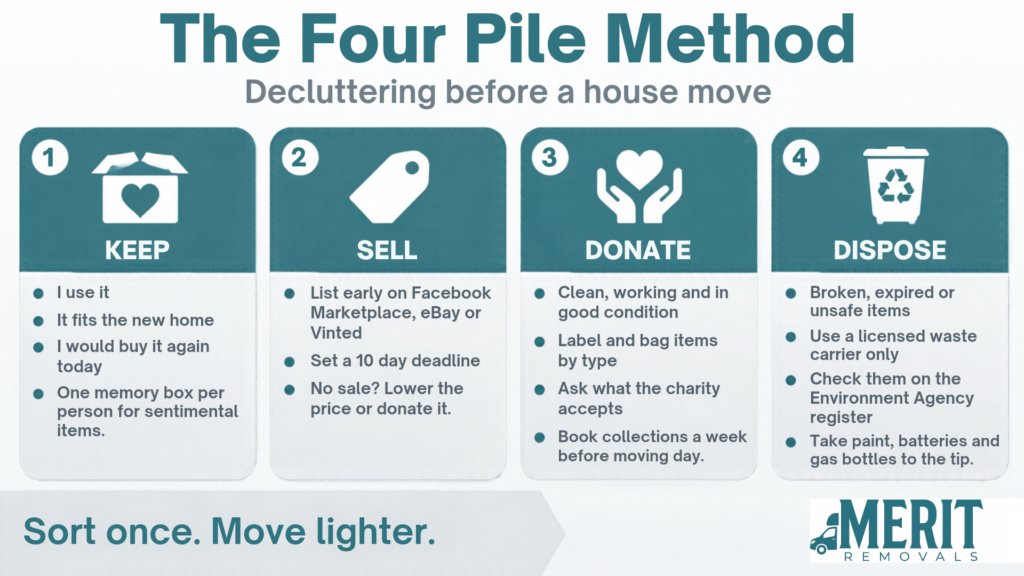
Do not try to decide everything at once. Work through one area at a time and put each item into one of four piles. Make the decision once and move on.
Pile 1: Keep
Be strict. An item stays only if it passes at least one of these tests:
- I have used it in the last year.
- It will fit and work in the new home.
- I would happily buy it again today.
- It has genuine sentimental value.
For sentimental items, give each person in the household one memory box. If it does not fit in the box, choose your favourites and photograph the rest.
Pile 2: Sell
Anything in good condition and worth more than a few pounds can be sold. Furniture, appliances, tools, bikes and designer clothes all sell well on Facebook Marketplace, eBay and Vinted. Set a deadline. If an item has not sold in ten days, lower the price or move it to the donate pile.
Pile 3: Donate
Clean, working items in good condition can go to charity. We cover where they can go in the donation section below.
Pile 4: Dispose
Broken, stained, unsafe or expired items go here. Some can be recycled, some need a council tip, and some need a licensed carrier. The clear out section explains each route.
Expert tip: Put a Maybe box in the corner of the room. Write the date on it. If you have not opened it by moving day, you do not need it. Donate it without looking inside.
How to Declutter Room by Room
Go through the house in the order of how hard each room is. Start with the spaces you rarely use, because it is easier to be ruthless there.
Loft, garage and shed
These rooms hide the biggest piles. Look for old paint, broken tools, camping gear, suitcases and boxes you have not opened since the last move. Check what is hazardous, such as paint, solvents and gas bottles, because these need special handling.
Kitchen
- Bin anything past its date and donate unopened, in date tins and packets.
- Keep one set of everyday plates, glasses and cutlery per person, plus a few extras.
- Let go of duplicate gadgets, mismatched lids and the bread maker you used twice.
- Run down the freezer in the last few weeks so you are not moving food.
Bedrooms and wardrobes
Empty the wardrobe onto the bed. Try the rule that if you have not worn something in a year, it goes. Bag donations by type so charities can sort them easily. Old duvets, pillows and worn out towels can often go to animal shelters, so call your local one first.
Living room
Look at books, DVDs, ornaments and cables. Keep what you love and what you use. Measure your big pieces of furniture against the new floor plan before you decide whether they are coming.
Bathroom
Bin old make up, expired medicines (return these to a pharmacy), and half empty bottles. This room is quick to clear and gives you momentum.
Home office and paperwork
Shred what you no longer need and scan what you want to keep. Keep important documents such as passports, contracts and property papers in a folder that travels with you, not on the van.
Children’s rooms
Involve your children. Let them choose toys to donate and tell them where the toys are going. It turns a loss into something positive. Outgrown clothes and baby equipment are always in demand.
What to Do With Unwanted Furniture Before Moving
Furniture is the hardest category because it is large, awkward and expensive to dispose of badly. If you are wondering what to do with unwanted furniture before moving, you have five realistic options.
| Option | Best for | What to know |
|---|---|---|
| Sell it | Good quality, modern or solid wood pieces | Take clear photos, list early and offer collection only. |
| Donate it | Clean items in good condition | Upholstered items need a fire safety label for most charities. |
| Council bulky waste | Old, worn or damaged items | Fees and waiting times vary, so check your council early. |
| Give it away | Anything usable that will not sell | Local community groups and neighbours often collect quickly. |
| Book a junk removal service | Large loads and tight deadlines | Choose a licensed carrier and ask for a receipt. |
The British Heart Foundation offers a free collection service for furniture in good condition, and upholstered pieces must carry a fire safety label. You can check what they accept and book a collection on the BHF website. Many charities cannot take used mattresses for hygiene reasons, so check before you book.
If time is short or the pile is large, our junk removal service can take it off your hands in one visit, so your removal day stays focused on the things you are keeping.
Expert tip: Measure doorways, stairs and the rooms in the new home before you decide what to keep. A sofa that will not fit through the front door is just an expensive problem.
Donate Before Moving House: Where Your Items Can Go
Donating is the best result for items that still work. It keeps them out of landfill and helps someone else. If you plan to donate before moving house, a little preparation makes the process smooth.
- Charity shops: Clothes, books, homeware, toys and small furniture. Call ahead for large donations.
- Furniture and electrical charities: Many offer free collection, which saves you a trip.
- Food banks: Often welcome unopened, in date food, though needs vary, so check first.
- Schools, nurseries and community groups: Good homes for books, craft supplies and toys.
- Animal shelters: Often happy to take old towels and bedding.
Old electricals
Anything with a plug, battery or cable is classed as waste electrical equipment and should not go in your bin. Material Focus, the not for profit behind the Recycle Your Electricals campaign, has reported that UK households are sitting on billions of pounds worth of unused small electricals. You can use the Recycle Your Electricals locator to find a nearby drop off point. The locator lists close to 30,000 places across the UK.
You can also search for other local recycling points on Recycle Now.
How to make donating easy
- Clean items and check that they work.
- Bag or box them by type and label each one.
- Ask the charity what they accept before you set off.
- Book collections at least a week before moving day.
- Keep a note of what you donated in case you need it for a tax record.
Moving House Clear Out: Rubbish, Recycling and the Law
Some things cannot be sold or donated. A moving house clear out always leaves a pile of rubbish, and how you get rid of it matters.
Your options for rubbish
- Household waste recycling centre (the tip): Best for small loads you can drive yourself. Check opening hours and any booking rules.
- Council bulky waste collection: Good for a few large items if you can wait.
- A licensed waste carrier: Best for bigger clearances or tight deadlines. Our junk removal and cleanout services cover this, including properties you are leaving behind.
The legal check most people miss
In the UK, householders have a duty of care for the waste they hand over. If you give your rubbish to someone who is not a registered waste carrier and it is fly tipped, you can be fined or prosecuted, even though you did not dump it yourself.
Before you accept any quote, do this:
- Ask for the company’s waste carrier registration number.
- Search for it on the Environment Agency public register of waste carriers.
- Ask where the waste will be taken.
- Get a receipt for the job.
Be careful with social media adverts and unmarked vans offering cheap rubbish removal. A low price is not worth a fine.
Items that need special handling
Paint, solvents, batteries, gas cylinders, aerosols, fireworks and cleaning chemicals should not go in a general rubbish load or on a removal van. Reputable removal firms usually will not carry them. Take them to your household waste recycling centre or follow your council’s guidance.
Common Decluttering Mistakes
- Starting too late. Last minute clear outs end in expensive, rushed choices.
- Doing it all in one weekend. You will tire and start keeping everything. Short sessions work better.
- Moving things to deal with later. A box marked Misc is just postponed decisions.
- Keeping things out of guilt. A gift you dislike has done its job once you have been thankful for it.
- Ignoring the new space. Always compare what you own to what the new home can hold.
- Skipping the waste carrier check. It takes two minutes and protects you legally.
- Forgetting to tell your removal company. If your load shrinks, ask whether your quote can change.
Decluttering Checklist
- Set a decluttering start date at least eight weeks before moving.
- Measure the new home and your large furniture.
- Clear the loft, garage and shed first.
- Sort each room using the four pile method.
- List sale items and set a ten day deadline.
- Book charity collections and bulky waste slots.
- Take electricals to a proper recycling point.
- Check any waste carrier on the Environment Agency register.
- Dispose of hazardous items at the tip.
- Run down the freezer and food cupboards.
- Do a final sweep of every cupboard and drawer.
- Update your removal company on the final volume.
For everything else on your to do list, see our guide to things to do before your moving day.
How Merit Removals Can Help
You do not have to do this alone. We help people across Greater Manchester every week, and a lighter load makes our job, and your move, easier. If you are moving a smaller amount, our man and van service can be a flexible fit. If the pile of leftovers is too big, our junk removal team can clear it before moving day.
FAQs About Decluttering Before a House Move
When should I start decluttering before moving house?
Start six to eight weeks before your move date. That gives you time to sell items, book charity collections and arrange rubbish removal without rushing. If you have less time, begin with the loft, garage and large furniture.
What should I get rid of before moving house?
Get rid of anything broken, expired, duplicated or unused for a year. Common items include old paint, mismatched crockery, outgrown clothes, unused gadgets, worn bedding and furniture that will not fit the new home.
Does decluttering reduce moving costs?
Often, yes. Removal quotes usually depend on the volume of belongings and the time needed. Fewer items can mean fewer hours, a smaller vehicle and less packing material. Ask your removal company how a smaller load affects your quote.
What do I do with unwanted furniture before moving?
Sell good pieces online, donate clean furniture in good condition to a charity with a free collection, or give it away locally. For old or damaged items, use a council bulky waste collection or a licensed junk removal company.
Can I donate furniture for free in the UK?
Yes. Some charities, including the British Heart Foundation, offer free furniture collection for items in good condition. Upholstered furniture usually needs a fire safety label. Check what each charity accepts before you book.
How do I get rid of rubbish before moving house?
Take small loads to your local household waste recycling centre. For larger loads, book a council bulky waste collection or a registered waste carrier. Always check the carrier’s registration and get a receipt.
Do I need to check a waste carrier’s licence?
Yes. UK householders have a duty of care to make sure their waste goes to a registered carrier. You can search the Environment Agency public register and ask for the carrier’s registration number before you agree to anything.
Should I declutter before or after packing?
Before. Packing items you later throw away wastes boxes, tape and time. Declutter each room first, then pack only what you are keeping.
What can I not take on a removal van?
Most removal companies will not carry hazardous items such as paint, solvents, gas cylinders, batteries, aerosols and chemicals. Dispose of these at your household waste recycling centre before moving day.
How do I declutter when I am short on time?
Focus on large items first, such as unwanted furniture and anything stored in the loft or garage. Then clear one room per day with the four pile method, and book a junk removal service for anything left.
Conclusion
Decluttering before a house move is the one job that makes every other part of moving easier. Start early, sort with the four pile method, sell or donate what still has value, and dispose of the rest through a registered carrier. You will pack less, move less and unpack faster.
The best moves begin long before the van arrives. A few focused weekends now will save you stress, money and a lot of heavy lifting later.
Ready to Move Lighter?
Whether you need a removal team, a man and van or help clearing what you no longer want, Merit Removals is here to help. Get a free quote today and tell us about your move.